
Here are the next two ways to increase profitability.
Your balance sheet tells you whether you are really profitable. Your P&L just tells you whether you are profitable for a specific period of time.
The three ratios that I write about this week are called liquidity ratios. They answer the question, is your business becoming more or less profitable? Generally increasing current ratios mean increasing profitability. Decreasing current ratios mean decreasing profitability. If you write a large check to purchase a truck or some other asset, these actions affect your ratios.
#15 – Track Your Current Ratio Trend
Current ratio is current assets divided by current liabilities.
Current assets are cash or things that are turned into cash within a year. Generally they are accounts receivable, inventory and prepaid expenses.
For those of you who do large construction projects, work in progress/underbillings is in current assets too.
Current liabilities are expenses that must be paid within a year. Generally they are accounts payable, taxes payable, deferred income for maintenance plans/warranty and the current portion of long term debt. For those of you who do large construction projects, overbillings are in current liabilities.
This ratio must be higher than 1. If it isn’t, then you don’t have enough assets to pay your bills. The only way to get it over one is profitable sales on a continuing basis.
Increasing current ratio generally means increasing profitability.
The higher the ratio, the easier it is to pay your bills. The only exception to this is if you are building up inventory and don’t use it on a regular basis. I explain this next in the acid test.
#16 – Track Your Acid Test Trend
Bankers, say that we keep too much inventory which is the hardest current asset to liquidate. They ask, “Can you still pay your bills if inventory is taken out of the equation?”
The acid test, also called the quick ratio, was developed.
The acid test is current assets minus inventory divided by current liabilities.
Obviously with inventory out of the equation, the acid test will be lower than the current ratio. But, how much lower?
You can have an acid test less than one and still be able to pay your bills.
The trend to watch is the spread between current ratio and acid test. If your current ratio is 2 your acid test should be 1 or higher. If it is less than one, you have too much inventory.
If your current ratio is increasing and your acid test is staying constant, then you are building inventory. Why? Did you purchase a large stocking order which you will use over the next few months? If so, the spread will be large between the two ratios, but it should decrease.
#17 – Track Your Accounts Receivable to Accounts Payable Trend
The accounts receivable to accounts payable ratio is the last liquidity ratio. It is calculated by accounts receivable divided by accounts payable.
Here’s the tricky part of this ratio:
Accounts receivable is only receivables from customers. It does not include owner receivables or employee receivables (i.e. from tool accounts).
If more that 50% of your business is COD sales, then you add accounts receivable plus cash divided by accounts payable.
Accounts payable is only payables to vendors. It does not include taxes payable or payables to owners.
If your accounting system is set up where credit cards are separate from payables, then you must add accounts payable plus credit cards when calculating this ratio.
Increasing receivables to payables might be good or bad. If your receivable days are constant (explained in last week’s Contractor Cents), then an increasing ratio is good. If your receivable days are increasing and this ratio is increasing, you are headed for a collection problem.
Make the phone calls and don’t get into a cash crunch!
If you want to do this tracking in less than 2 minutes a month, subscribe to Financially Fit Business – turn financial data into impactful graphs!
Go to www.financiallyfit.business to get started.
Next week: More ways to increase profitability.
How financially fit is your business?
Click here to take this one minute assessment
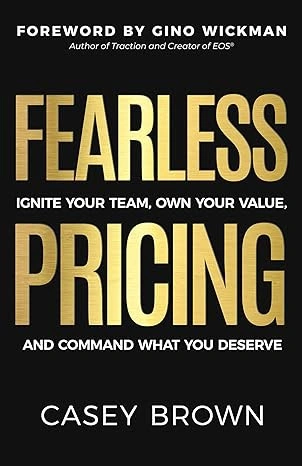
Books/Audios that could help your business and you.
Casey Brown makes an interesting case for whether you should raise prices and how to raise prices if you decide to do so. She has implemented what she suggests in the book and gives you stories from companies she has helped change their pricing strategy.
Click here to order on Amazon